
Surveyor Live 26
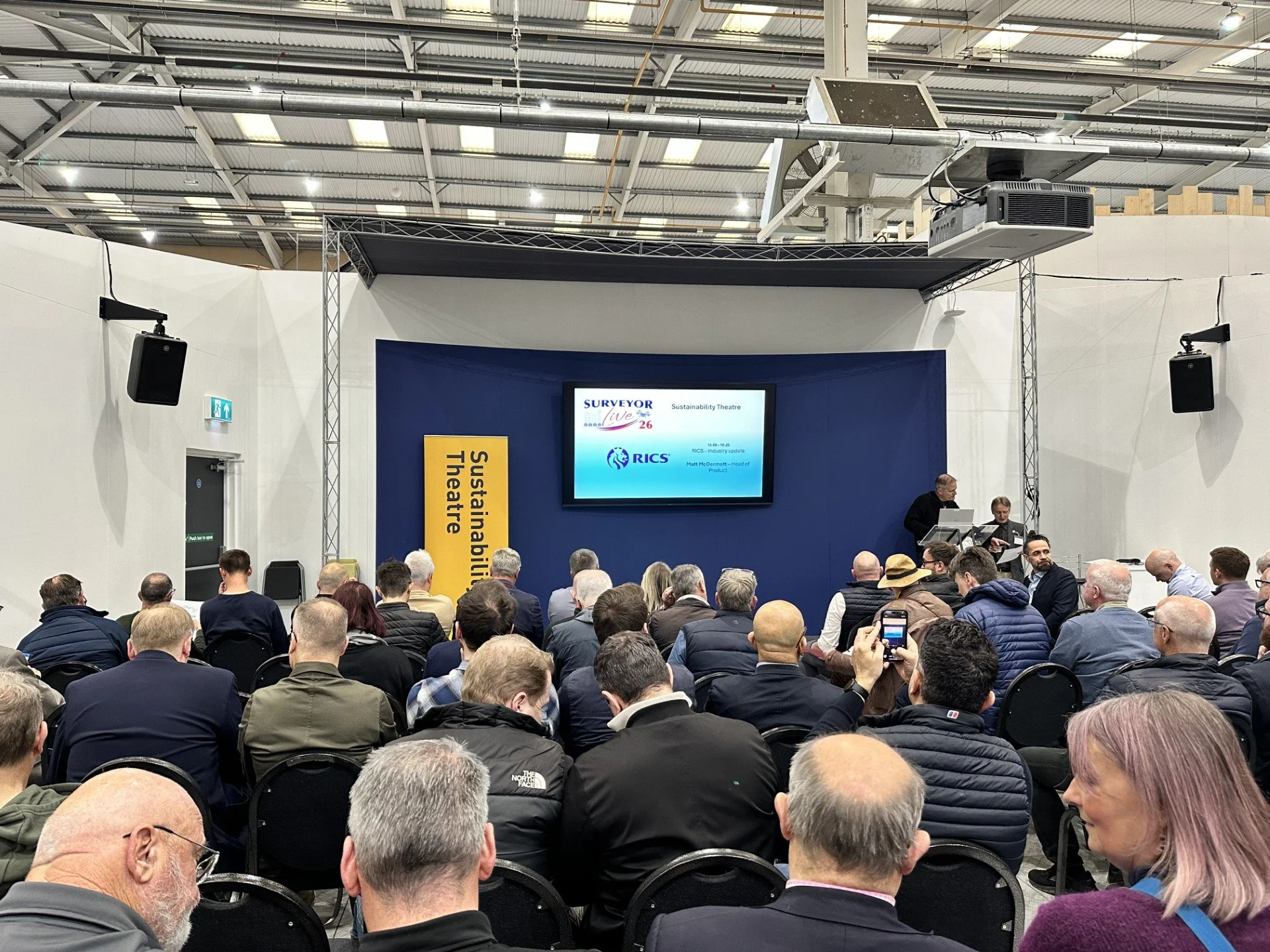
What a fantastic day at Surveyor Live. It was great to see so many professionals gathered together under one roof, and even better to spend the day in the NBC, where the conversation kept circling back to the same question I think about every day: how do we bring AI into surveying without losing what makes a surveyor a surveyor?
Four talks stood out for me, and each one added something different to that question.
RICS: setting the standard for AI in surveying
Matt McDermott, RICS Head of Product, opened with a straw poll: roughly half the room already use AI, mostly ChatGPT, and not much beyond it. That gap between awareness and actual practice is exactly where I think the next few years of change will happen.
The headline news was the RICS AI Standard, which came into effect on 9 March 2026 and is now mandatory for members. It's a sensible framework, and it lands on the same principle I've built Surveyr around: AI is a tool, not a professional excuse. The surveyor who signs a report remains wholly responsible for the advice in it, whatever software helped produce it.
RICS also set out where AI genuinely adds value across the survey workflow: data capture, report writing, quality assurance, and visualisation. What struck me most was the caution attached to photo recognition of building pathology. It can flag a possible defect, but it can't replace the surveyor's judgement in interpreting it. That's not a limitation to design around. It's the whole point.
RICS also published a ten-point checklist for surveyors evaluating AI software providers, covering everything from data storage and encryption to whether surveyors were actually involved in developing and testing the model. It's a good checklist, and one I'd encourage anyone evaluating a tool like Surveyr to work through.
A live look at AI in practice
A second session picked up where the RICS talk left off, walking through what an AI-assisted workflow can look like day to day: capturing photos and voice notes on site, turning that into report language, flagging inconsistencies before a report goes out, and presenting findings to clients in a more interactive format than a static PDF.
It was a useful, practical demonstration of the same four stages RICS had set out. It also raised a question the whole industry needs to sit with: if a surveyor's professionally authored report goes into an AI system, what does that mean for copyright and for model training? Nobody in the room had a clean answer, and I don't think anyone in the industry does yet.
The human cost of getting it wrong
The mould and damp session was the one that stayed with me longest. It was a genuinely sobering look at the health risks of damp housing stock, backed by WHO and European Environment Agency evidence, and illustrated with a case where a survey missed roof defects that went on to cause serious mould colonisation in a family home.
The point that hit hardest: mould can be both hidden and invisible. The absence of visible mould on the day of a survey doesn't mean the absence of microbial contamination behind a wall or under a floor. Current responses, bleach spray, mould eradicator, stain block paint, treat the symptom and leave the cause untouched.
This is exactly why context matters so much in defect detection. A single photo of a damp patch tells you very little on its own. What matters is the reasoning behind it: where the moisture is coming from, how long it's likely been there, and what it's connected to elsewhere in the building. That's the standard AI-assisted tools need to be held to, and it's the standard I hold Surveyr to.
Where home buyer surveying is heading
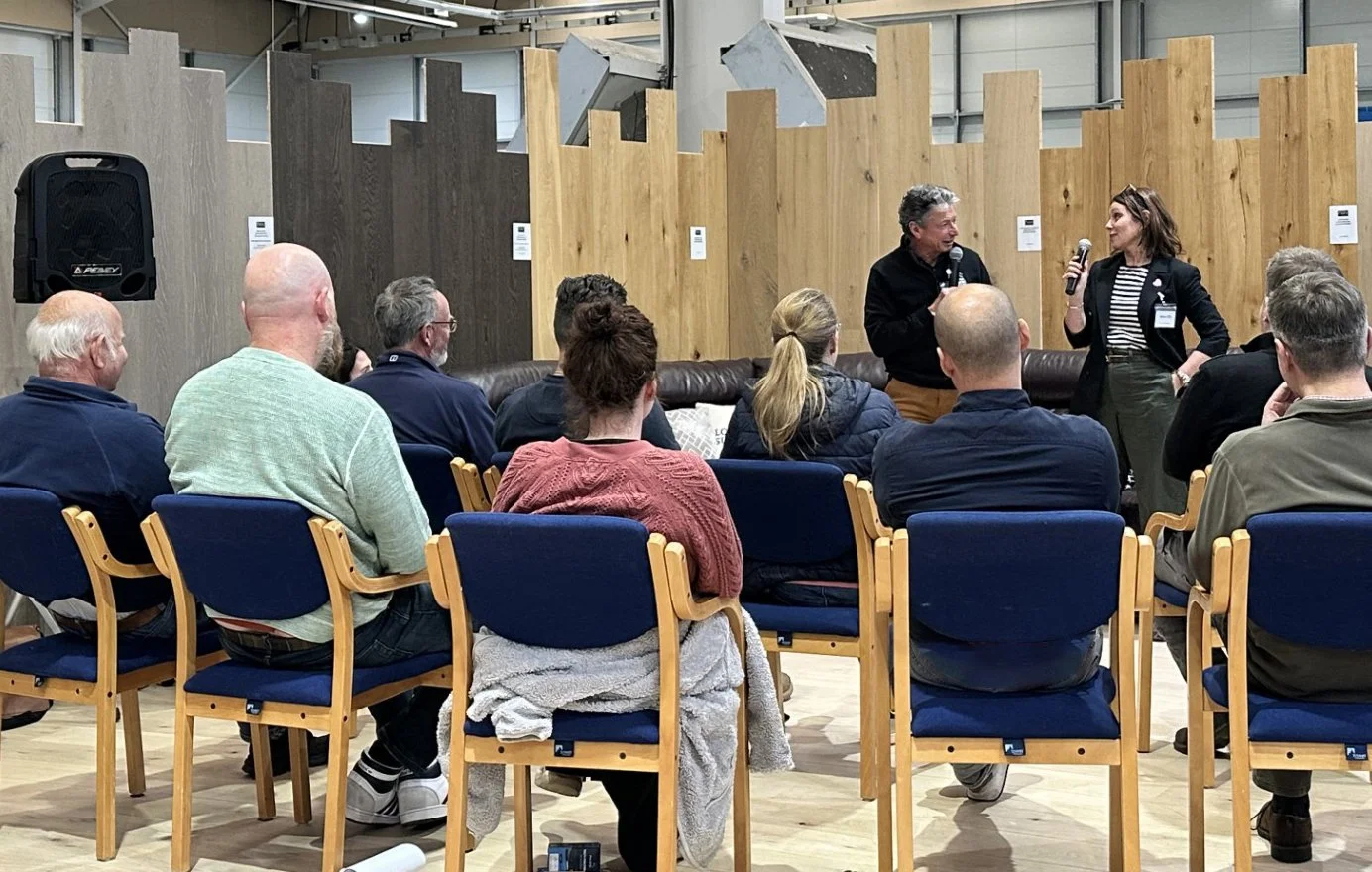
The final session looked further out, at how the structure of home buying itself might change. The panel walked through Scotland's mandatory, seller-commissioned home reports, Denmark's ten-year seller liability for hidden defects, and Norway's FINN.no model of upfront property information. England has its own government roadmap for seller-commissioned surveys taking shape, and the room was clear-eyed about the risk: if the profession doesn't help shape what that looks like, it will simply happen to us, the way it did in Scotland.
The framing I keep coming back to is that a survey is fundamentally a risk assessment, not just a description. Identify risk first, prioritise what matters most, and give people advice they can actually use to make a decision. Technology's role in that is to make good information available earlier and more clearly, not to replace the judgement that turns information into advice.
What I'm taking away
The message across every talk, whether the topic was AI, mould, or the future shape of the market, was the same one I heard at Surveyor Live and have been building towards with Surveyr since the start: AI is a tool to support surveyors, not replace them, and professional judgement remains as important as ever.
What I enjoyed most, though, was the people. It was a brilliant opportunity to reconnect with familiar faces and make some great new connections across the industry. Events like this are a reminder of just how much expertise and passion there is within the surveying profession, and why building technology for surveyors only works if you build it alongside them.